- Free Local Instore Pickup
- Track Your Order
- Welcome to Generator Superstore. We Provide Best Generator item
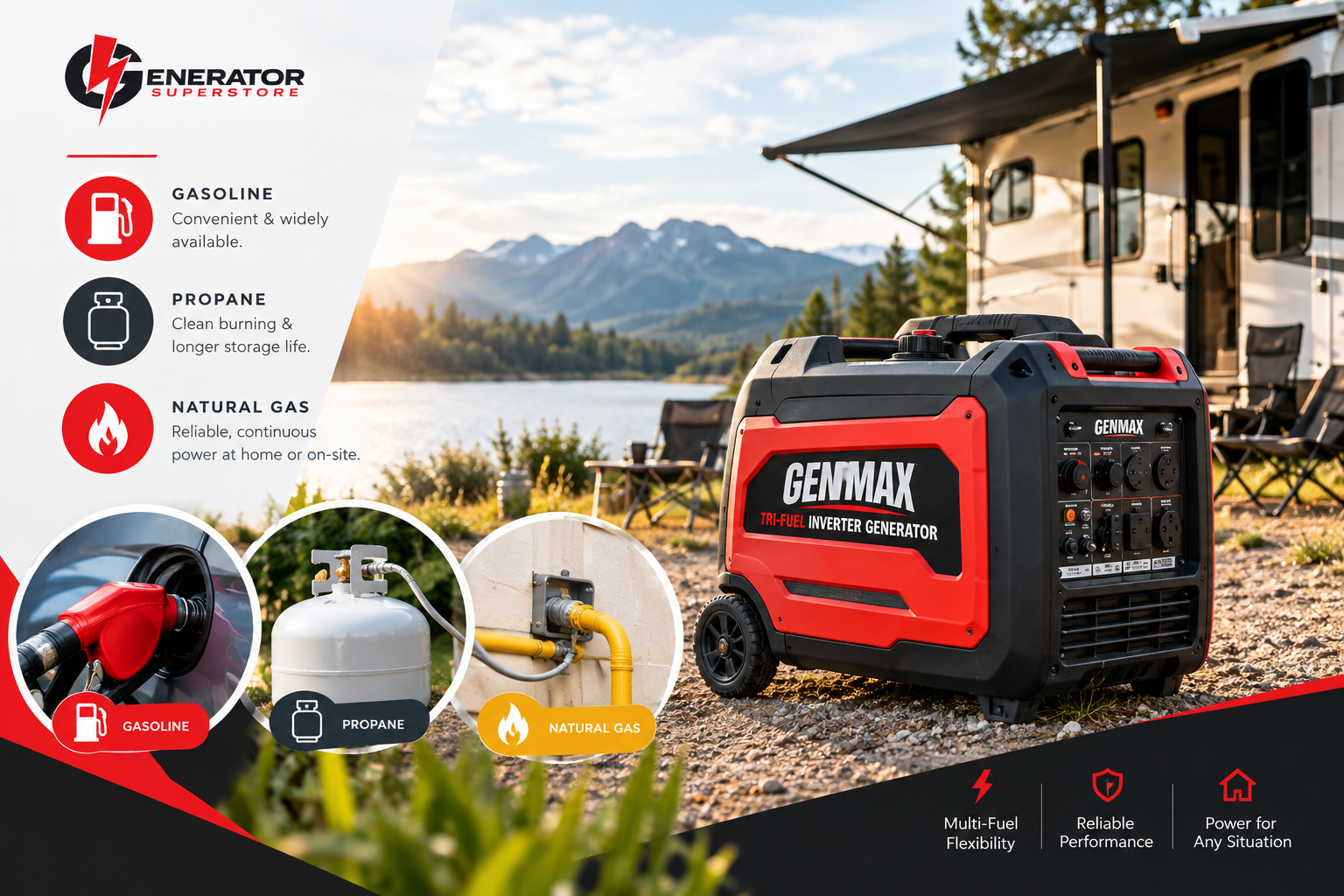
Summary: Fuel availability plays an important role in selecting a tri-fuel inverter generator for backup power. Learn how gasoline, propane, and natural gas differ in storage, supply, runtime, and safety. The content explains how to estimate fuel use, calculate electrical loads, check generator specifications, and prepare for outages. Generator Superstore helps buyers compare suitable models for their power needs.
Fuel availability plays a major role in choosing a backup power source. A Genmax tri fuel inverter generator offers the option to use gasoline, propane, or natural gas, depending on the model’s specifications. This flexibility can help homeowners prepare for power cuts, outdoor work, and other situations that require backup electricity. However, each fuel type has different storage needs, supply limits, and operating costs. Understanding these differences helps you select a generator that fits your location, daily power needs, and access to fuel. Before buying, consider how often you may need backup power and which fuel you can obtain with the least difficulty. This simple check can help you prepare for both short outages and longer interruptions.
Your local fuel supply should guide your generator choice. Gasoline is widely sold at fuel stations, but you need approved containers for safe storage. Propane is often supplied in refillable cylinders, which need a suitable storage area. Natural gas may be available through a fixed utility connection, depending on your property. Before buying, check which fuel sources you can access during an extended outage. A generator that accepts several fuel types gives you more options if one supply becomes difficult to obtain. Think about travel distance, refill services, and the amount of fuel you can store safely. If fuel stations are far from your home, a stored supply of an approved fuel may offer greater convenience. Your choice should reflect real access, not just the number of fuel options listed for a generator.
Each fuel type serves a different purpose. Gasoline can be useful for short outages because it is easy to obtain in many areas. However, it needs careful storage and regular checks to maintain fuel quality. Propane can be stored in approved cylinders for future use, provided the containers and storage conditions meet safety rules. Natural gas can support longer operation through a suitable utility connection, but service may be interrupted during certain emergencies. Compare these factors with your local conditions rather than choosing a fuel based on convenience alone. Also, check whether the generator produces the same power output with each fuel. Some models deliver different wattage ratings depending on the fuel used. This detail matters if you plan to run appliances with high power needs. Read the product manual to confirm the approved fuels and output limits.
A short outage may require only a few hours of backup power. A storm or utility fault can create a longer interruption, so fuel planning becomes more important. Estimate how long essential appliances must run each day. Include items such as refrigerators, lights, fans, and communication equipment. Next, check the generator’s runtime information for each approved fuel type and load level. Actual runtime can vary based on power demand and operating conditions. A clear estimate helps you work out how much fuel you may need and how often refueling could be required. You should also decide which appliances must stay on and which can remain off. This helps control the total load and reduce fuel use. Keep a written list of essential devices and review it before an outage, so your backup plan is easy to follow.
Fuel storage affects which generator makes sense for your property. Gasoline must be kept in approved containers, away from living spaces, heat, and ignition sources. Propane cylinders also require approved storage and careful handling. Follow local fire rules and the fuel supplier’s guidance for safe storage. Natural gas systems need suitable connections and professional installation. Never connect a generator to a gas supply without confirming that the unit is designed for that fuel and that the setup meets the manufacturer’s requirements. Safe handling reduces fire risks and helps protect people and property. Keep children and pets away from stored fuel and operating equipment. Never refuel a hot or running generator. Turn it off and allow it to cool before adding gasoline. The manual should guide storage, connection, and operating procedures for your exact model.
The best fuel choice depends on more than availability. Check the generator’s rated output, fuel consumption, and runtime at different loads. A unit powering a refrigerator and a few lights may use less fuel than one running several large appliances. Make a list of essential devices and add their wattage to estimate the required load. Also account for appliances that draw extra power at startup. Compare fuel consumption figures from the official product documentation, as gasoline, propane, and natural gas can produce different output levels and runtimes on the same generator. If you expect to use the generator often, compare the cost and effort of getting each fuel type. Do not rely on a single runtime figure without checking the load level behind it. These steps can help you estimate operating needs before purchase.
A tri-fuel generator can offer useful flexibility, but changing fuel types must follow the manufacturer’s instructions. Check the approved fuel conversion process and any required fittings or connections before use. Never assume every model can switch fuels in the same way. Keep the correct accessories available, inspect connections regularly, and arrange professional help for gas line work. It is also wise to identify nearby fuel suppliers before an outage occurs. A practical backup plan helps you avoid relying on a single source during an emergency. Test the generator as directed by the manufacturer and confirm that all parts work correctly before an outage. Store the manual in an easy-to-reach place, so you can review the proper steps if you need to change fuel or check a warning.
At Generator Superstore, our goal is to help you compare backup power options based on your fuel access, electrical load, and expected runtime. The Genmax 10500 tri fuel generator may suit buyers who want fuel flexibility, but its exact output and operating limits should be checked in the official specifications. Review the available fuel sources at your property, confirm safe installation needs, and plan for essential appliances before making a decision. Think about storage space, service needs, and the amount of power required during an outage. Contact Generator Superstore for help comparing suitable generator models and choosing a backup power solution that fits your needs.
1. What are the benefits of a tri-fuel inverter generator?
A tri-fuel inverter generator offers fuel flexibility by supporting gasoline, propane, and natural gas, subject to the model’s approved specifications and requirements.
2. Which fuel is best for a backup generator?
The best fuel depends on local availability, storage space, expected runtime, operating costs, and the generator’s approved fuel types and output ratings.
3. How can I estimate generator fuel consumption?
Check the manufacturer’s fuel consumption and runtime figures at different loads, then compare them with your expected daily power demand and operating hours.
4. Is it safe to store fuel for a generator?
Yes, if you follow local rules, use approved containers, maintain required clearances, and keep fuel away from heat, ignition sources, and living spaces.
5. What should I check before buying a tri-fuel generator?
Review rated wattage, fuel consumption, runtime, approved fuel types, connection needs, safety instructions, maintenance requirements, and the power needs of essential appliances.
 English

