- Free Local Instore Pickup
- Track Your Order
- Welcome to Generator Superstore. We Provide Best Generator item
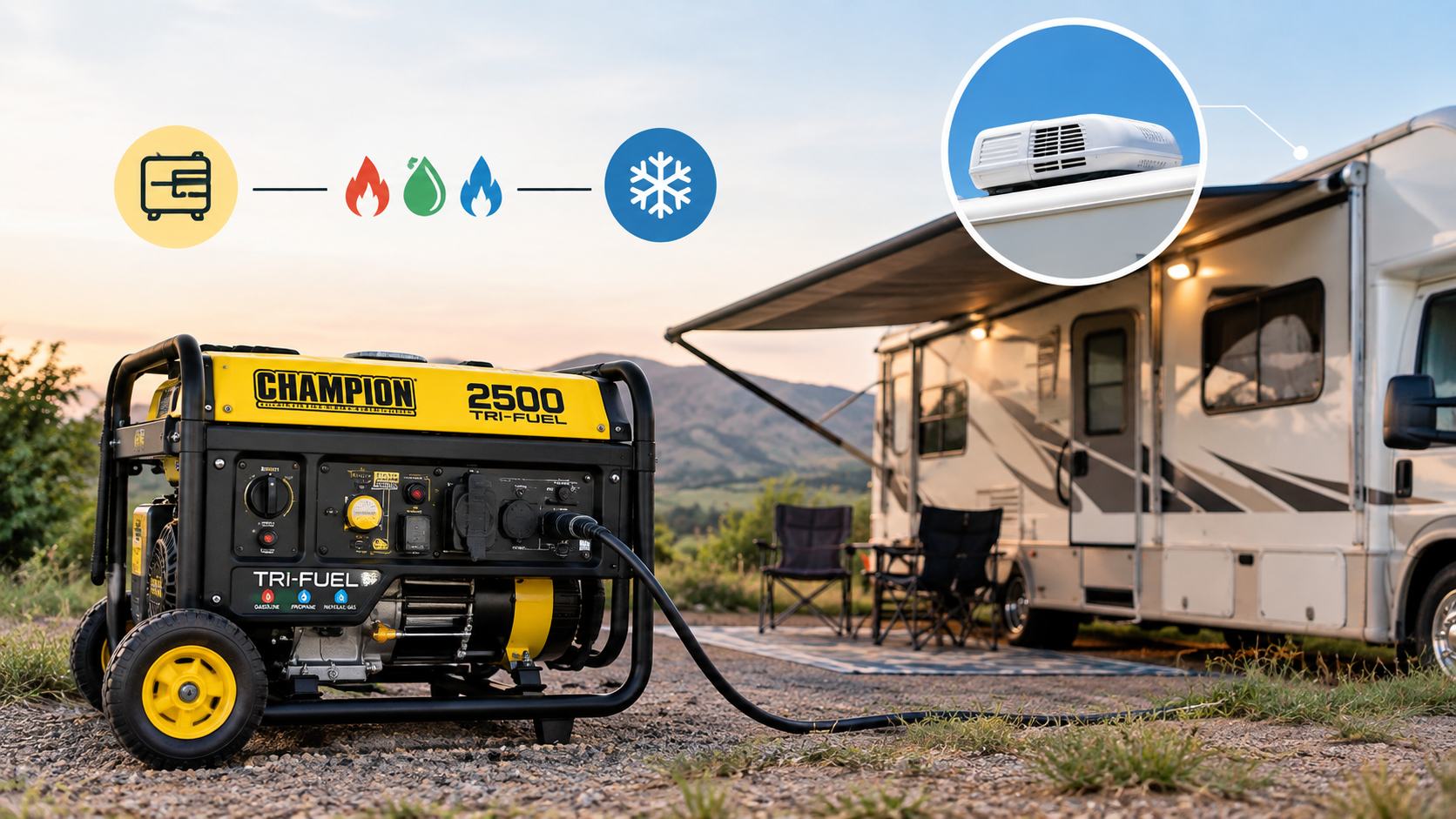
Summary: RV owners can learn how a 2500-watt inverter generator handles an air conditioner’s startup and running demand. The guide covers compressor surge, continuous wattage, other RV appliances, soft start devices, fuel-related output changes, parallel operation, RV connections, and load planning. It also explains how Generator Superstore can help buyers select a generator that suits their actual RV power needs.
An RV air conditioner can be one of the hardest appliances for a small portable generator to start. The answer is not based on the generator’s headline wattage alone. The Champion 2500 tri fuel generator keyword may sound like a direct match for RV use, but buyers need to check the exact model, rated output, compressor demand, and other loads inside the coach. Current Champion 2500-watt inverter models are generally listed with 2500 starting watts and 1850 running watts, while current 2500-watt models are offered in gasoline or dual-fuel versions rather than a 2500-watt tri-fuel configuration. This difference matters because the available output can change based on the fuel being used. Always check the exact model number and its current specifications before making a purchase.
An RV air conditioner does not draw the same amount of electricity at every moment. Its compressor motor needs a strong burst of current during startup. After the compressor starts, its electrical demand usually settles to a lower running level. The fan and other parts of the cooling system also use power during operation.
That short startup event can decide whether a small generator can run the cooling system. A generator may have enough power for the compressor after it starts but still struggle during that first surge. A failed start can cause the generator to overload or shut down.
The air conditioner’s data plate and manual are the best places to check its electrical requirements. The generator’s running rating should then be compared with that information. This simple check gives a much better answer than using the generator’s advertised peak number.
This is a common point of confusion. A 2500-watt generator can have a lower continuous output. The starting rating and running rating serve different purposes, so both figures need to be reviewed before use.
For example, Champion lists 2500 starting watts and 1850 running watts for several 2500-watt inverter models. Its 201323 dual-fuel model is rated at 1850 running watts on gasoline and 1665 running watts on propane.
That means an RV owner should use the running figure for the main load calculation. The starting figure helps show the short-term capacity available for startup. Using the wrong rating can lead to an unrealistic power plan.
Starting the air conditioner is only the first part of the test. The generator also has to supply other equipment inside the RV. This is easy to miss during a quick generator check.
A refrigerator may cycle on. Battery charging may continue. Lights, televisions, fans, cooking equipment, and other devices can add demand. Each load may seem small, but several active devices can quickly use the remaining capacity.
A useful RV power plan gives the air conditioner priority. High-draw appliances can stay off during compressor startup and during periods of heavy cooling demand. This can help keep the total electrical load within the generator’s rated output.
Some RV owners install a soft start device on the air conditioner. Its purpose is to reduce the compressor’s startup demand. This can be useful for certain RV cooling systems paired with smaller generators.
This can make it easier for a smaller generator to start a compatible air conditioner. It does not increase the generator’s rated running capacity. The generator still needs enough continuous power for the air conditioner and the other connected loads.
Compatibility should be checked with the air conditioner manufacturer or a qualified RV technician before installation. The correct device must match the air conditioner’s motor and electrical system.
Fuel type can affect generator output. A dual-fuel model may produce different running wattage on gasoline and propane. Champion’s 2500-watt dual-fuel models show this difference in their specifications.
Buyers should never assume that the same wattage is available on every fuel. Check the rating for the fuel you plan to use. This is especially important for an air conditioner because cooling can create a steady electrical load for long periods.
Also verify the exact product model before purchase. Product names can sound similar while their fuel systems and output ratings differ. Checking the model number helps avoid choosing equipment with the wrong fuel system or power rating.
A single 2500-watt inverter may work for a suitable RV air conditioner under controlled load conditions. Another RV may need more capacity. The difference can come from the air conditioner size, startup demand, and other appliances running at the same time.
Champion offers parallel-ready 2500-watt inverter models. With approved equipment, two compatible units can work together to provide more available power. Champion lists parallel operation as an option for its 2500-watt inverter models.
This can be useful for RV owners who want air conditioning plus other major loads without relying on one small generator. Only compatible models and approved parallel equipment should be used.
Before buying, collect four key details: the air conditioner’s running demand, compressor startup requirement, RV connection rating, and the other appliances that may operate at the same time. Also check the generator’s rated output for the selected fuel.
Then compare those figures with the generator’s rated output for the chosen fuel. This gives a much clearer answer than simply asking whether a 2500 watt generator can run an RV AC. It also helps show whether a soft start device or parallel setup may be worth considering.
At Generator Superstore, our focus is helping RV owners match generator capacity with actual electrical demand. We can help you compare the air conditioner’s requirements, fuel options, connection needs, and possible parallel setups before you buy. If a Champion 2500 dual fuel generator fits your application, we can help you review its specifications and determine whether its available output suits your RV. Need help selecting an RV generator? Contact Generator Superstore with your air conditioner model and electrical load details. Our team can help you choose a practical generator setup for reliable RV cooling and everyday power needs.
1. Can a 2500 watt generator run an RV air conditioner?
It can run a suitable RV air conditioner if startup and running demands stay within the generator’s rated output.
2. Why does an RV AC need extra power at startup?
Its compressor motor can draw a brief surge during startup, so your generator needs enough capacity to handle that temporary demand.
3. Can a soft start help an RV air conditioner?
A compatible soft start can reduce compressor startup demand, which may make your RV air conditioner easier for a smaller generator to start.
4. Can two 2500 watt generators provide more RV power?
Compatible inverter generators can operate in parallel with approved equipment, giving your RV greater available power for larger combined loads.
5. Does propane provide the same generator output as gasoline?
Not always. Your dual-fuel generator may have different rated output on propane and gasoline, so check the manufacturer’s specifications for each fuel.

 English

